
VIP member

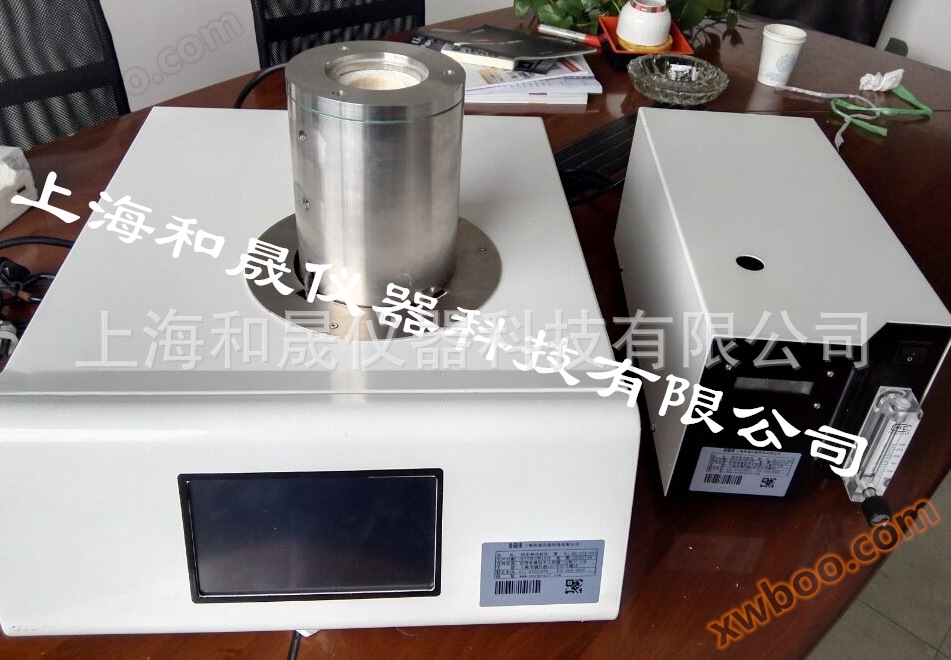
HS-STA-002 Synchronous (Integrated) Thermal Analyzer
HS-STA-002 Synchronous (Integrated) Thermal Analyzer
Product details
HS-STA-002 synchronous thermal analysis combines thermogravimetric analysis (TG) with differential thermal analysis (DTA) or differential scanning calorimetry (DSC). By using the same sample in the same measurement, TG and DTA or DSC information can be obtained synchronously.
DSC: melting, crystallization, phase transition, reaction temperature and reaction heat, combustion heat, specific heat
TG: Calculation of thermal stability, decomposition, oxidation-reduction, adsorption desorption, free water and crystalline water content, composition ratio, etc

Measure and study the following characteristics of materials:
DSC: melting, crystallization, phase transition, reaction temperature and reaction heat, combustion heat, specific heat;
TG: Calculation of thermal stability, decomposition, oxidation-reduction, adsorption desorption, free water and crystalline water content, composition ratio, etc

Technical parameters:
1. Temperature range: Room temperature~1150 ℃, expandable to~1350 ℃
2. Temperature resolution: 0.1 ℃
3. Temperature fluctuation: ± 0.1 ℃
4. Heating rate: 1~80 ℃/min
5. Temperature control methods: heating, constant temperature, cooling
6. Constant temperature time: 0-300min can be set arbitrarily
7. Cooling time: 15 minutes (1000 ℃~100 ℃)
8. Measurement range of balance: 1mg~2g
9. DSC range: 0 to ± 500mW
10. DSC resolution: 1 μ W
11. Resolution: 10 μ g
12. Constant temperature time: 0-300min can be set arbitrarily
13. Display mode: 24 bit color, 7-inch LCD touch screen display
14. Atmosphere device: Built in gas flow meter, including two-way gas switching and flow rate control
Atmosphere: Inert, oxidizing, reducing, static, dynamic
15. Software: Intelligent software can automatically record TG curves for data processing and print experimental reports
16. Data interface: Standard USB interface
17. Power supply: AC220V 50Hz
DSC-TGA curve graph

TGA-DTG curve graph


Online inquiry
-
Contacts
-
Company
-
Telephone
-
Email
-
WeChat
-
Verification Code
-
Message Content
-